
Skip to content
AnunakiObservatory

AnunakiObservatory

Un observatorio amateur para estudios profesionales.Estudios de Exoplanetas, fotometría de asteroides, supernovas, ocultación de objetos estelares, astrofotografía, el Observatorio Anunaki al servicio de astrónomos profesionales.

Primary menu

  • Observatory
    • Astronomical Resources
  • Photometry
    • Exoplanets
    • Asteroids
  • Astrophotography
  • ProAm
  • Contact
  • ES

Author:

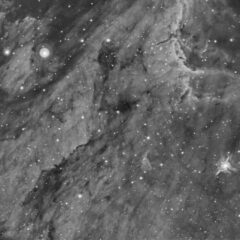
IC5070 PELICAN NEBULA

Posted on

The Pelican Nebula or IC 5070 is an emission nebula in the constellation Cygnus, located near Deneb (α Cygni) and separated from the larger nebula.NGC 7000by a dark region. It stretches about 30 light-years across and is located about 1800 Continue Reading

CategoriesastrophotographyTagsastrophotography, nebula

Articles and publications

Posted on

Articles in different publications including MNRAS and A&A, know the results of our observations through great researchers. Transit timing analysis of the exoplanet TrES-5 b. Possible existence of the exoplanet TrES-5 c WASP-92, WASP-93 and WASP-118: Transit timing variations and Continue Reading

CategoriesSin categoríaTagsarticles, Scientific Publications

HAT-P-21b

Posted on

HAT-P-21 is a G-type main sequence star about 910 light-years away. The star has an amount of metals similar to solar abundance. The 2015 survey has not been able to detect any stellar companions. The star rotates rapidly, being driven Continue Reading

CategoriesHATNet_engTagsexoplanet, exoplanet transit, photometry

HAT-P-20b

Posted on

HAT-P-20b orbits a V = 11.339 K3 dwarf star with a period P = 2.875317 +/- 0.000004d. The central star has a mass of 0.760 +/- 0.03 solar masses, radius of 0.690 +/- 0.02 Rsun, teff = 4595 +/- 80 Continue Reading

CategoriesHATNet_engTagsexoplanet, exoplanet transit, photometry

HAT-P-19b

Posted on

HAT-P-19b orbits around V = 12.901 K1 dwarf star GSC 2.283-00.589, with a period P=4.008778 + -0.000006 d, transit epoch Tc= -0.00034 2.455.091.53417+ (BJD), and transit duration 0.1182 -0.0014 + d. The central star has a mass of 0.84 solar Continue Reading

CategoriesHATNet_engTagsexoplanet, exoplanet transit, photometry

HAT-P-17b

Posted on

HAT-P-17 is a K-type main sequence star about 92.6 parsecs (302 ly) away. It has a mass of about 0.857 ± 0.039 M☉. It is the host of two planets, HAT-P-17b and HAT-P-17c, both discovered in 2010. A search for Continue Reading

CategoriesHATNet_engTagsexoplanet, exoplanet transit, photometry

HAT-P-18b

Posted on

HAT-P-18 is a K-type main sequence star about 530 light-years away. The star is very old and has a concentration of heavy elements similar to solar abundance. A survey in 2015 detected very strong starspot activity in HAT-P-18. In 2010, Continue Reading

CategoriesHATNet_engTagsexoplanet, exoplanet transit, photometry

HAT-P-4b

Posted on

HAT-P-4b is an extrasolar planet orbiting the star BD+36º2593 more than 1,000 light-years away in the constellation Boötes. It was discovered by means of the transit method on October 21, 2007. It is the fourth planet detected by the HATNet Continue Reading

CategoriesHATNet_engTagsexoplanet, exoplanet transit, photometry

HAT-P-5b

Posted on

HAT-P-5b is an extrasolar planet orbiting the star HAT-P-5, more than 1,100 light-years away, in the constellation Lyra. It was discovered through the transit method in 2007. It is the fifth planet detected by the HATNet Project. The planet is Continue Reading

CategoriesHATNet_engTagsexoplanet, exoplanet transit, photometry

HAT-P-3b

Posted on

HAT-P-3b is an extrasolar planet that lies 457 light-years from Earth. It was discovered by the HATNet project, using the transit method. Its mass is estimated at about 0.6 times that of Jupiter, with a heavy metal center of about Continue Reading

CategoriesHATNet_engTagsexoplanet, exoplanet transit, photometry

Post navigation

← Older posts
Newer posts →
  • Twitter
  • Instagram
Copyright © 2026 AnunakiObservatory. All Rights Reserved.
Clean Education by Catch Themes
Scroll Up